Ask a room full of dog owners what they changed that made the biggest difference, and almost nobody says the thing you’d expect. It isn’t the better food or the new harness or the training class. It’s smaller than that, and usually free.
We went through a long thread of people answering exactly that question, and the answers clustered tightly enough to be worth writing down — especially if you’ve recently adopted and you’re being told to tire your dog out.
The walk isn’t about distance
By a wide margin, the most common answer was some version of I stopped rushing them.
What a sniffari actually is
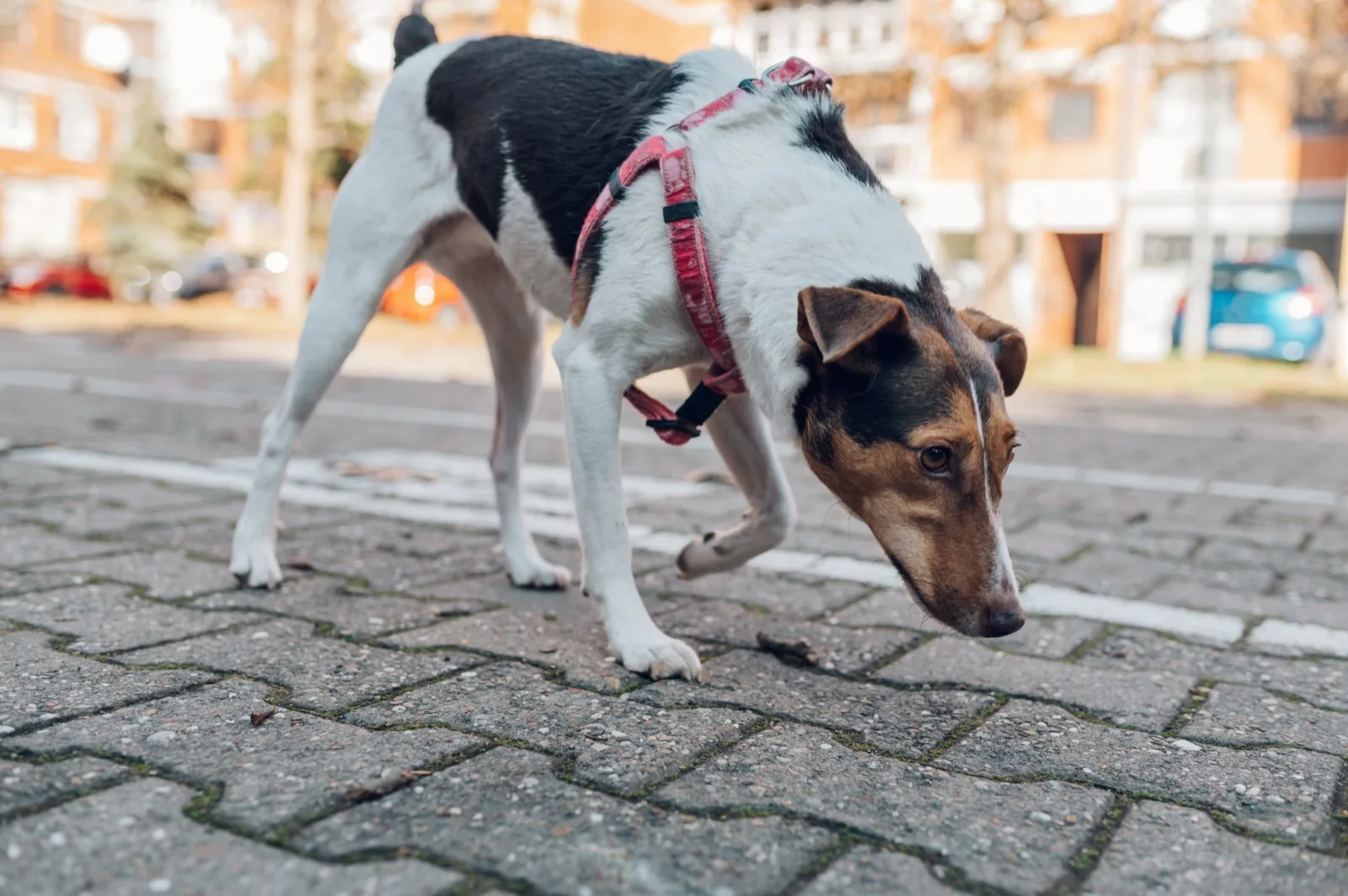
A sniffari is a walk where the dog chooses. Route, pace, how long to stand in one spot with their nose in a hedge — all theirs. You’re there to keep them safe and hold the other end of the lead. The word is a blend of “sniff” and “safari,” and once you’ve heard it, it’s hard to think of those walks any other way.
The shift people describe is from covering ground to letting the dog read. One owner put it perfectly: their dog is checking his pee-mails, and sending a few.
Why a slower walk can do more
What owners report, over and over, is that their dog settles better afterward — and that a slow twenty minutes can do what a brisk forty-five doesn’t.
That’s worth taking seriously as experience, and worth being straight about as evidence. You’ll see it claimed online that sniffing measurably lowers a dog’s cortisol, and the research doesn’t currently show that. A 2025 scoping review in Applied Animal Behaviour Science — “The value of sniffing”, which gathered every study it could find on scent activities for dogs — turned up four that measured salivary cortisol. One found no change, two found decreases, one found an increase. In one of the decreases, cortisol fell in the control group as well, so the scent can’t take the credit.
The review’s own conclusion is that the “lack of research limits our understanding of the welfare implications of scent activities for dogs in any capacity.” It’s also worth knowing that almost all of that work is on trained detection dogs or on smells piped into shelter kennels — not on letting a dog choose where to put their nose on a walk. Nobody has really studied the thing we’re describing here.
None of which is a reason not to do it. A dog’s nose is their richest sense, and a walk where they’re hurried past everything is a walk with that sense switched off. Just don’t let anyone tell you there’s a number behind it yet. Try it for a week and watch your own dog — that’s the honest version.
How to actually do one
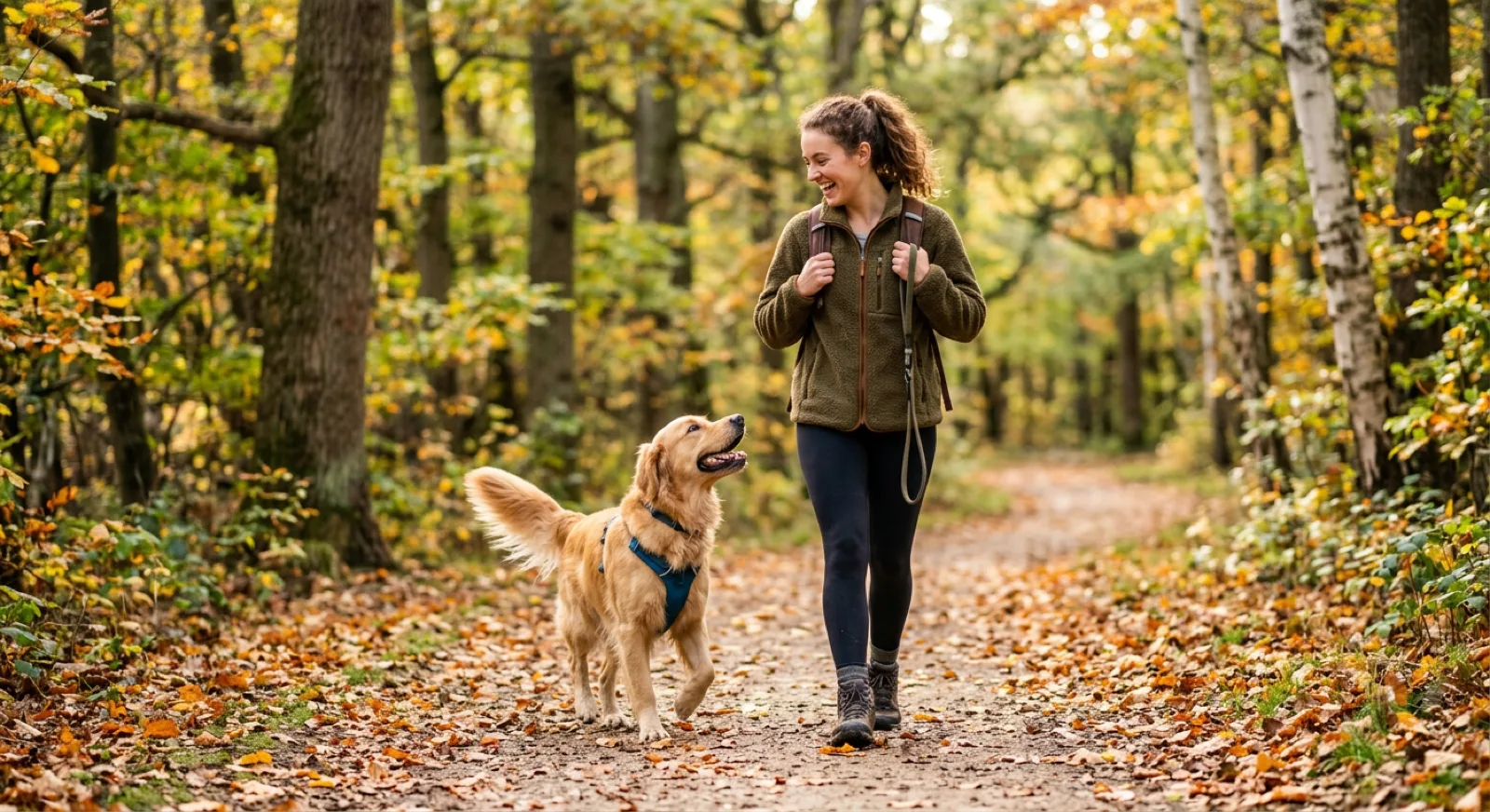
- Use time, not distance. Set twenty minutes and let the route happen. One owner swapped their step tracker for a stopwatch and never went back.
- Give them more line. A longer lead lets a dog arc and wander without the line ever going tight.
- Let them choose at junctions. Stop at the corner, wait, and go where they go. People describe dogs who never pick the same route twice.
- Let them finish it. Most dogs turn for home when they’re done.
Games that cost nothing
The second cluster of answers needed no walk at all — which matters in a Minnesota February, and on any evening when nobody is going outside.
Hide the treats
The game has a dozen names — find it, search, treasure hunting — and one shape. Shut the dog out of a room, scatter a handful of treats or their measured dinner around it, then let them in with a word that means go.
Owners describe this one doing more than they expected, particularly for anxious dogs: something about a problem with a findable answer seems to settle them. Two people mentioned their dog learned to track their footsteps while they hid, so they now walk a deliberately confusing route around the house first. That’s the game working, not failing.
The cardboard box
Free, and the one people seemed most delighted by. A box, some packing paper or toilet-roll tubes standing on end, a scattered meal or a few treats in the bottom. The dog shreds, sniffs, and works out where everything went.
Two sensible cautions from the same thread. Some dogs swallow what they shred rather than just tearing it, so this needs watching the first few times. And be aware you may never be allowed to recycle a box in peace again.
Make dinner take longer
Several people stopped putting food in a bowl and started putting it in something — a lick mat, a puzzle, a snuffle mat, or just scattered across the kitchen floor. One owner started during eight weeks of crate rest after surgery and never went back, because it turned two minutes of eating into half an hour of doing.
The ritual matters more than the activity
Here’s the part that surprised us most. When people described the thing their dog loved best, it was rarely elaborate. It was the same thing, at the same time, every day.
Ten minutes on the deck after breakfast. A “morning meeting” on the couch before work. Coffee together before the house wakes up. One person described their dog standing and staring while they ate breakfast, waiting for the bit that came next.
The activity is almost incidental. What the dog seems to love is that it’s predictable and it’s theirs — which is worth knowing when you’ve just adopted and everything in the house is still unfamiliar. Our 3-3-3 rule guide goes into why predictability does so much heavy lifting in those first weeks.
If your dog is still nervous
A few answers came from people living with a genuinely worried dog, and they’re the ones most likely to help a new adopter.
Let them set the terms
One owner takes their fearful dog out in public and lets her decide how long to stay and how close to get to anyone. Over time she went from hiding to watching with interest to accepting attention — on her schedule, not theirs.
Answer what they’re telling you
Another described a dog who barked at everything through the window. Rather than ignoring it, they started going over and looking too, then telling him calmly what it was. The barking dropped off. Whether or not the dog understood the words, being taken seriously seems to have been the point.
If your dog’s worry shows up mostly when you leave, that’s its own subject — how rescue dogs overcome separation anxiety covers it properly.
Tell them what happens next
Lots of people talk to their dogs, and several described the same specific payoff: saying “you’re staying home, I’ll be back” before picking up keys. Their dogs stopped orbiting the door and went to settle instead. Others have taught toy names, or a “show me” cue where the dog leads them to whatever they want.
Getting older doesn’t mean stopping
The answers about senior dogs were the ones that stayed with us, and they share a theme: nobody stopped doing the thing, they changed how it was done.
A ramp up to the bed for a dog whose jumps were getting unreliable. Soft steps beside the couch so a seventeen-year-old terrier could still get up for a cuddle. A stroller for a dog who couldn’t manage the distance — one owner used one daily for nearly three years after their dog went blind, so he still got the air and the smells even when the walking was beyond him.
Worth noticing too: one owner assumed their dog’s reluctance to walk was sore hips, and it turned out to be failing eyesight. Slowing down can have more than one cause, and it’s worth asking rather than assuming. If a senior dog is on your mind, fostering senior dogs is a good picture of what life with one is actually like.
None of this needs buying
That’s the thread’s real finding. A longer lead, a cardboard box, ten minutes at the same time every day, and a willingness to let the walk take as long as it takes.
If you’re at the start of this — still deciding, or waiting on an application — you can browse every rescue we list and filter by your city, or start from the dogs and cats focus pages. And if you’ve just brought someone home, how to train a rescue dog is the practical companion to this one.
We’re an independent directory and aren’t affiliated with any organization listed here. Nothing above is veterinary advice — if something about your dog’s movement or behavior worries you, your vet is the right call.