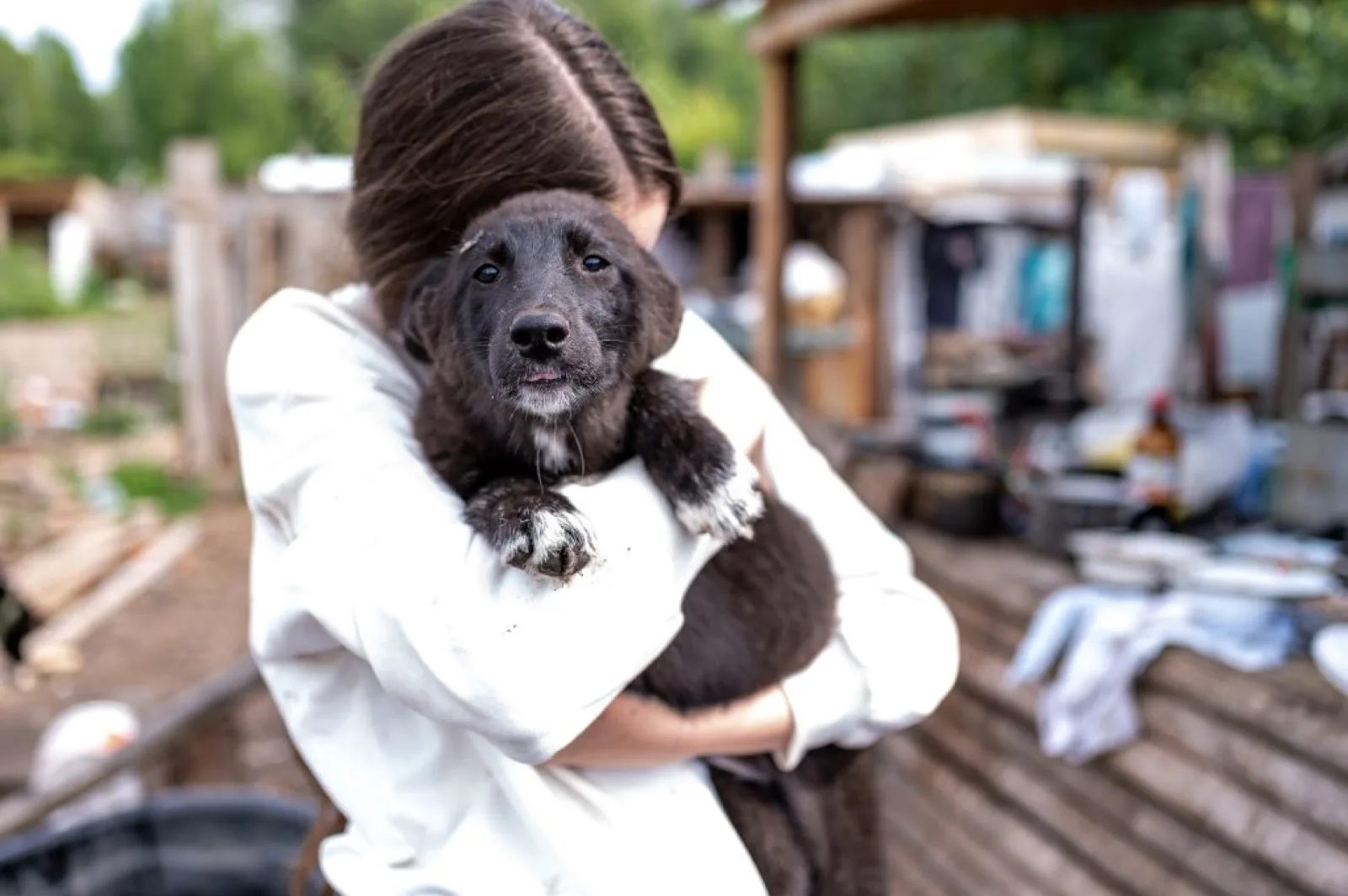
Training a rescue dog is one of the most rewarding things you’ll do as a new adopter — and one of the most misunderstood. Many people expect the process to look like training a puppy, but rescue dogs come with histories, habits, and in some cases, past trauma that make the approach fundamentally different. Knowing how to train a rescue dog means starting with trust, not commands, and building from there at your dog’s pace rather than your own timeline.
Build trust before you start training
The single biggest mistake new adopters make is rushing into formal training sessions during the first week home. Your rescue dog is still figuring out whether this new place is safe. Until they feel secure, obedience work is largely wasted — a dog in survival mode cannot learn the way a settled dog can.
Spend the first few days letting your dog explore at their own pace. Resist the urge to invite neighbors over, take trips to the dog park, or introduce your dog to every friend who wants to meet them. Keep their world small and predictable. Feed them at the same times each day. Walk the same route. Go to bed at the same hour. Routine is the fastest path to a rescue dog feeling safe.
Watch for signs your dog is beginning to decompress: relaxed body posture, sleeping in open areas rather than hiding, making eye contact with you, and approaching you voluntarily. These signals tell you the dog is ready to engage. Most rescues reach this point somewhere between the end of the first week and the end of the third. The 3-3-3 rule for rescue dogs is a helpful framework for understanding exactly what those early phases look like.
Creating the Right Training Environment
Once your dog is showing signs of comfort, set them up for success before the first training session. Choose a quiet room with no distractions. Keep sessions short — five to seven minutes at most. Use high-value treats your dog finds genuinely exciting, like small pieces of chicken or cheese, rather than standard dry kibble. End every session on a win, even if you have to make the final ask extremely easy. A dog that ends training feeling successful will come back eager to try again.
Teaching rescue dog basic commands with positive reinforcement
Positive reinforcement dog training is what most rescues will point you toward, particularly for a dog with an unknown or difficult history. Reward-based training teaches your dog that working with you produces good things — and for an animal still deciding whether this home is safe, that is the quickest route to a dog who volunteers rather than waits to be told.
Start with the four foundation commands: sit, down, stay, and come. These form the backbone of every other behavior you’ll teach and are genuinely useful in daily life.
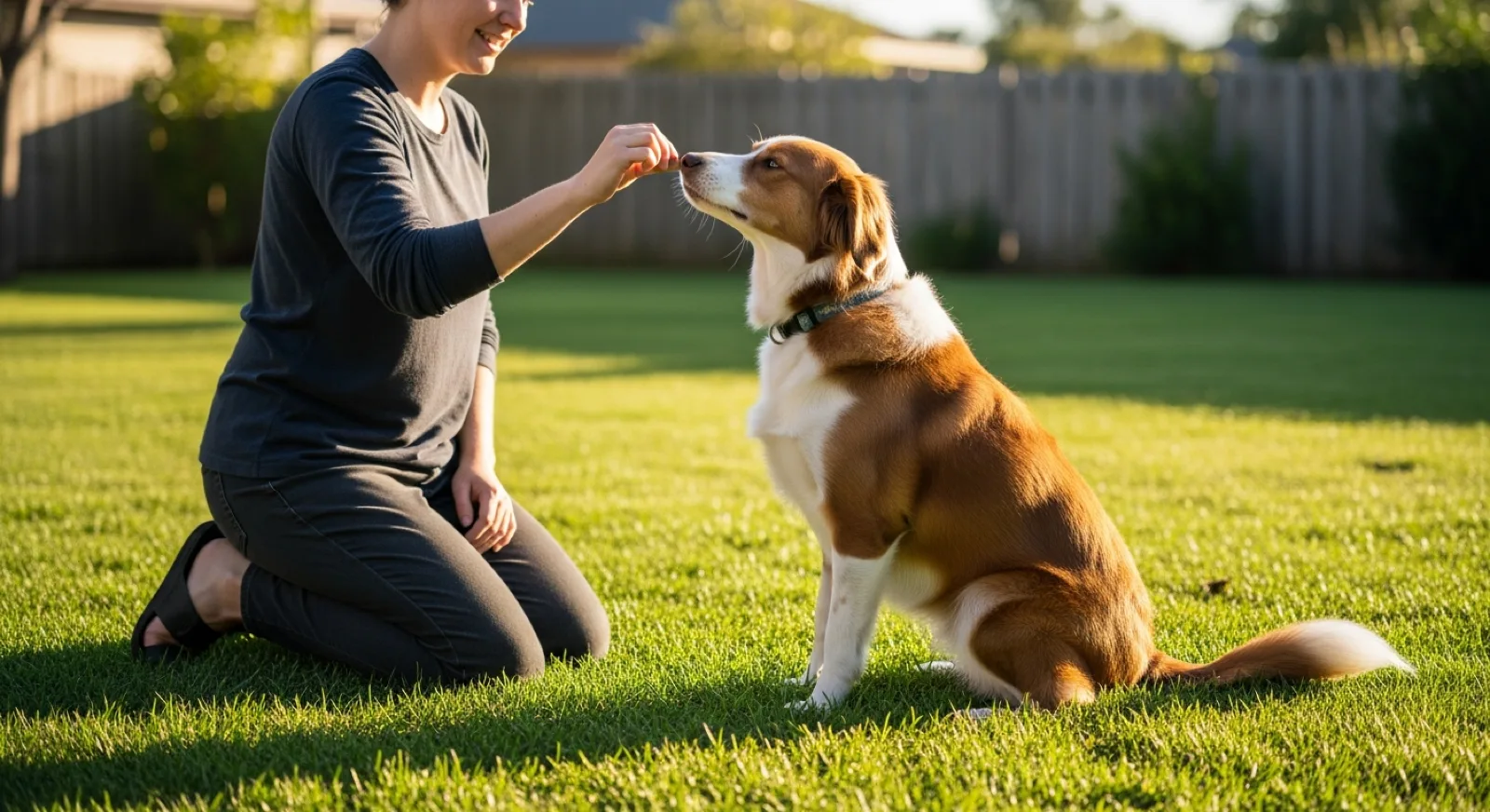
Sit is usually the easiest first command. Hold a treat at your dog’s nose, then slowly move it back over their head. As their nose follows the treat up, their hindquarters naturally lower. The moment their bottom hits the floor, say “sit,” mark the moment with a verbal “yes” or a clicker if you use one, and deliver the treat. Repeat this five to six times per session, keeping it short and positive.
Come (also called recall) is the most important rescue dog basic command from a safety perspective. Practice it first in the house, calling your dog by name followed by “come” and backing away a few steps to encourage them to follow. When they reach you, reward heavily with praise and treats. Never call your dog to you for something they dislike — nail trims, baths, or crating — during the learning phase. You want “come” to be reliably associated with good things.
Down and stay take more patience, especially for anxious dogs who are reluctant to make themselves vulnerable. Take your time. Breaking these into tiny steps, rewarding each approximation of the final behavior, works far better than waiting for a perfect response.
How Often to Practice
Aim for two to three short sessions per day. Spaced practice beats marathon sessions every time. Dogs, especially rescue dogs adjusting to a new environment, reach a point of mental saturation quickly. If your dog starts ignoring cues they knew five minutes ago, that’s your signal to stop and pick it up again later.
Crate training a rescue dog
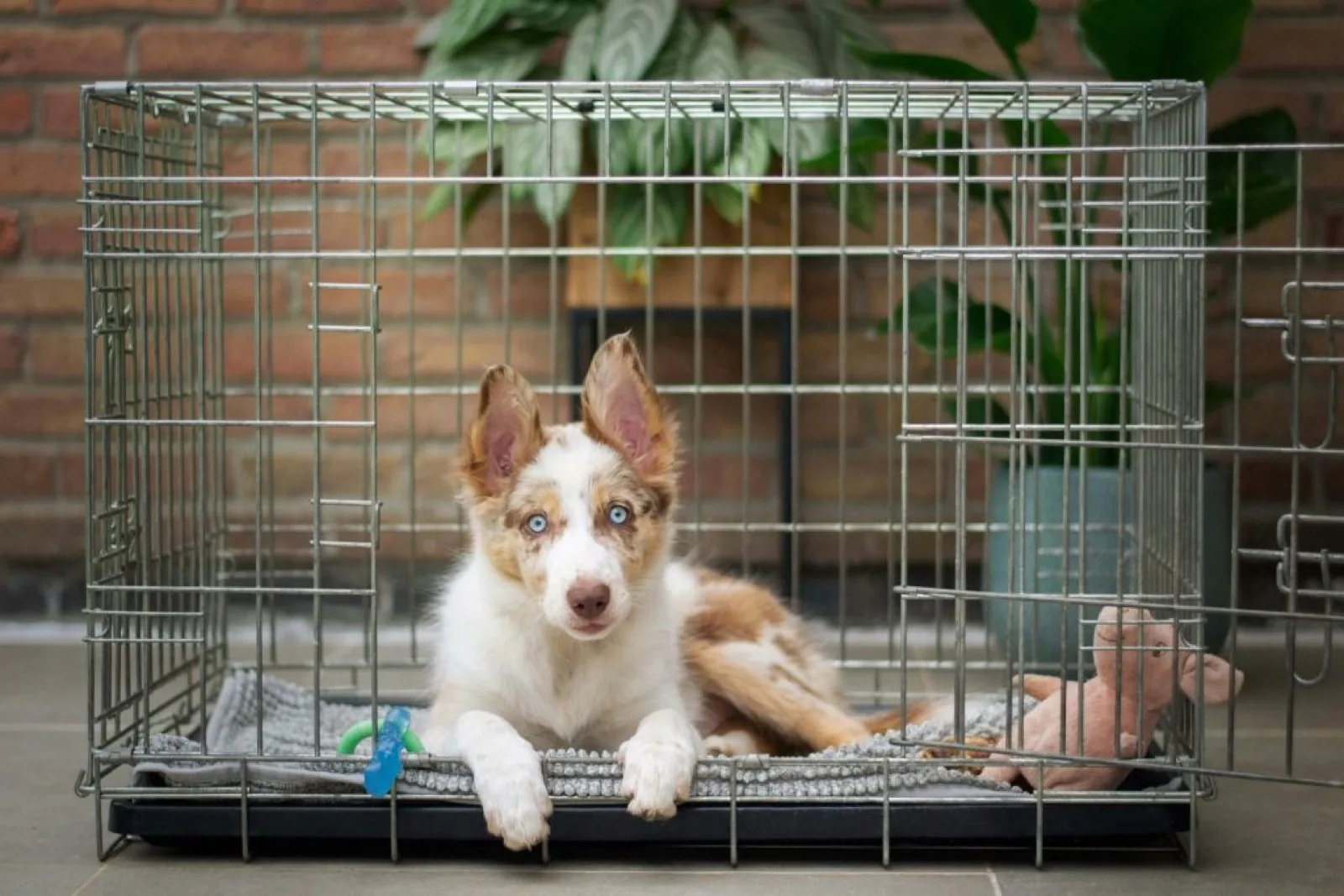
Crate training is one of the most misunderstood tools in rescue dog training. It is not confinement or punishment. Done correctly, the crate becomes your dog’s chosen retreat — a quiet den they enter voluntarily when they want to decompress.
Start by placing the crate in a low-traffic area with the door open and something comfortable inside. Toss treats near the entrance, then just inside, without closing the door. Let your dog investigate at their own pace. Some dogs walk right in; others take several days. Neither timeline is wrong.
Once your dog is comfortable entering the crate voluntarily, begin feeding meals inside with the door open. After a few successful meal sessions, close the door briefly while they eat, then open it again before they finish. Gradually extend the time the door is closed, always staying within sight during the early stages.
Common Crate Training Mistakes
Avoid using the crate as a reaction to misbehavior. If your dog associates the crate with being sent away after a mistake, they’ll resist it. Similarly, avoid leaving a new rescue in the crate for long stretches too early. Work up to longer durations over days and weeks, not hours.
Some rescue dogs arrive already crate-trained from foster care. If that’s the case, confirm it gently before assuming — introduce the crate the same way and let their comfort level tell you how much foundation work you need to do.

Managing behavioral issues in rescue dogs
Behavioral issues in rescue dogs are normal, not a sign that you adopted the wrong dog or that training has failed. Most surface during the second and third weeks home, once your dog feels comfortable enough to show you who they actually are. Common issues include leash reactivity, resource guarding, separation anxiety, and fear responses to specific triggers like strangers, loud noises, or other animals.
The key principle for all rescue dog behavioral issues is to avoid flooding — don’t repeatedly expose your dog to the thing that frightens them hoping they’ll get used to it. Instead, use counter-conditioning: pair the scary thing with something your dog loves, at a distance where they can still function. Over time, the association shifts.
Leash reactivity — barking, lunging, or stiffening at other dogs or people on walks — is among the most common issues in rescue dogs. Work on it by increasing distance from the trigger until your dog is calm enough to take a treat, then practice attention and “look at me” cues at that distance before gradually decreasing it over multiple sessions.
Separation anxiety is also common in dogs who’ve experienced multiple rehomings. Practice brief departures from the beginning: leave for thirty seconds, come back, leave for a minute, come back. Build duration slowly. Never make arrivals and departures emotionally charged — calm, low-key exits and returns help regulate your dog’s response.
When to Seek Professional Help
Some behavioral issues benefit from professional support, and seeking it early is not a sign of failure. If your dog shows aggression (growling, snapping, biting), has severe anxiety that doesn’t improve with gradual desensitization, or has a fear response you can’t safely manage, contact a certified professional dog trainer (CPDT-KA) or a veterinary behaviorist. Many Twin Cities rescues can point you toward trainers they trust.