
Focus
Schnauzer Rescues in Minnesota
A schnauzer's coat barely sheds, which sounds like a gift until you read the AKC's grooming schedule — clippers every five to eight weeks, for the life of the dog.
Filters
1 rescue

No rescues match those filters.
2 Schnauzers listed right now, at 2 different rescues
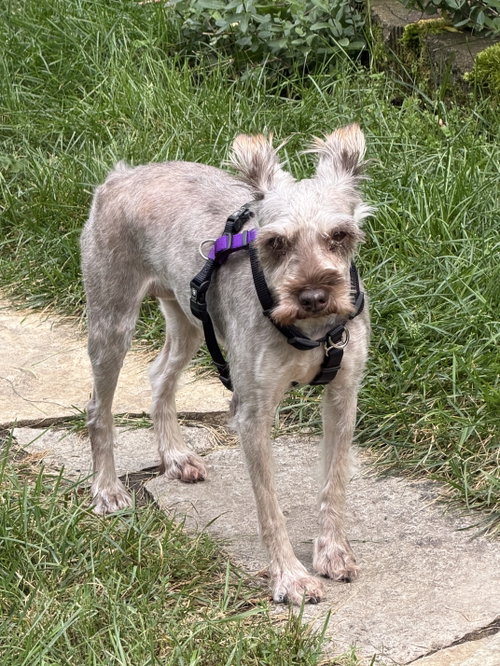



Mixes are in here too — each card shows the breed exactly as the rescue listed it. Every one goes to the rescue holding that animal, where you’ll find how to reach them. Adoptions happen fast, so check before you get attached.
Three sizes, one beard
The Miniature Schnauzer is the smallest of the three Schnauzer breeds — 12 to 14 inches, bred down from the Standard, and originally an all-round farm dog and ratter. The AKC describes them as tough, muscular and fearless without being aggressive, and as home-and-family oriented watchdogs. A rescue listing that says only “Schnauzer” could be any of the three sizes, and the gap between a Mini and a Giant is not a detail.
Low-shedding is not low-maintenance
The wiry topcoat and soft undercoat shed very little. What they need instead is work: frequent brushing and combing, and a clipper trim by a professional groomer every five to eight weeks for most pet Minis. Add a bath about once a month, monthly nail trims, and a weekly ear check.
That’s a recurring appointment and a recurring cost for the life of the dog, and it’s the single most useful thing to have priced out before you fill in an application.
The prey drive
The AKC’s line is that a Miniature Schnauzer should never be off leash outside a fenced area, because they might not resist the urge to chase a small animal. That’s the ratter still in there. If you have a cat, or a rabbit, or a neighborhood full of squirrels, it’s a conversation to have with the rescue about the individual dog rather than the breed.
Training-wise they’re quick and they bore quickly — the AKC recommends keeping sessions varied, and the breed does well at agility, obedience, rally and earthdog.
Health worth asking about
The AKC calls the breed generally healthy and long-lived, and names cataracts, hyperlipidemia, pancreatitis, liver shunts and urinary stones as the conditions it can be prone to. The national breed club recommends two checks: a cardiac exam and an ophthalmologist evaluation. Dental care gets its own mention — brush the teeth frequently.
Fewer schnauzers need rescue than they used to
This is the unusual part, and it comes from the breed club rather than from us. The American Miniature Schnauzer Club, established in 1933, writes on its rescue page that the last decade has seen a steady decline in Minis in need of rescue, which it attributes to responsible breeding practices and to breed-specific rescue working efficiently.
That’s good news about the breed and hard news about your search. Adopting a schnauzer in Minnesota is likely to mean waiting, and it’s likely to mean looking beyond the organizations that specialize — which is why the dogs above are drawn from every rescue in this directory. Some are crosses; each card carries the breed as the rescue listed it.
The AKC also runs a rescue network of more than 450 breed rescue groups nationally, and the AMSC publishes its own list of recognized rescues.
Adoption requirements, waiting lists and fees are set by each organization and they differ. We’re an independent directory and we’re not affiliated with any organization listed here, so confirm the details with them directly.