
Focus
Great Dane Rescues in Minnesota
A Great Dane standing on its hind legs is taller than most people, and almost every piece of practical Dane advice is really about what that size does to the ordinary business of feeding, walking and growing up.
Filters
1 rescue
No rescues match those filters.
13 Great Danes listed right now, at 2 different rescues

Dane
 Upper Midwest Great Dane Rescue
Darcy
 Carver-Scott Humane Society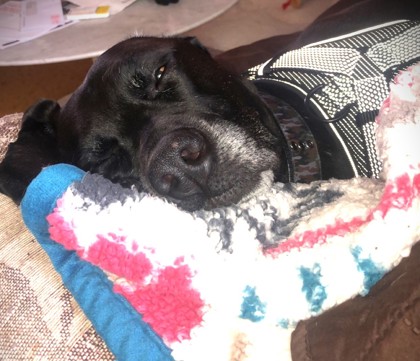
Chip
Upper Midwest Great Dane Rescue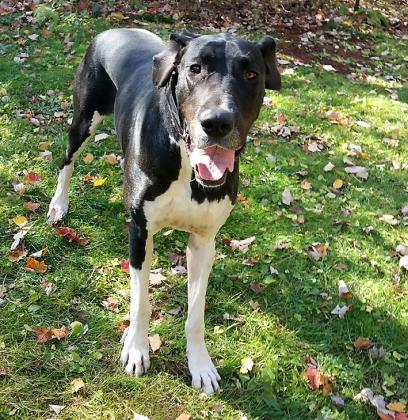
Echo
Upper Midwest Great Dane Rescue
Tiny Tim
Upper Midwest Great Dane Rescue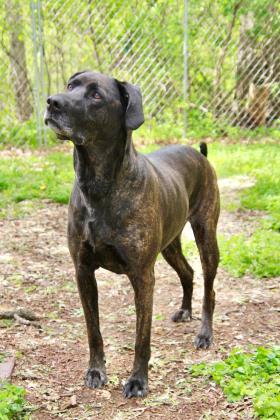
Bryndle
Upper Midwest Great Dane Rescue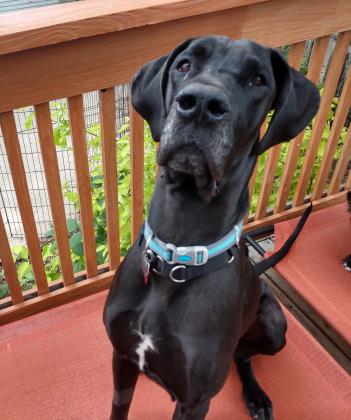
Luna
Upper Midwest Great Dane Rescue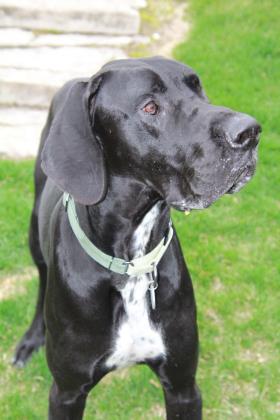
Eclipse
Upper Midwest Great Dane Rescue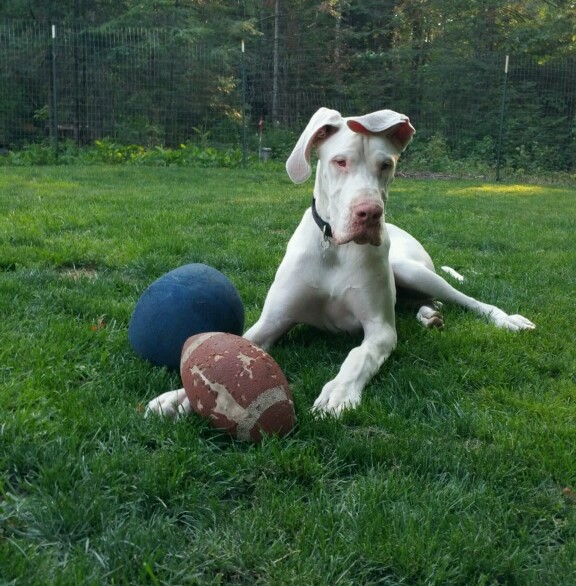
Maxwell
Upper Midwest Great Dane Rescue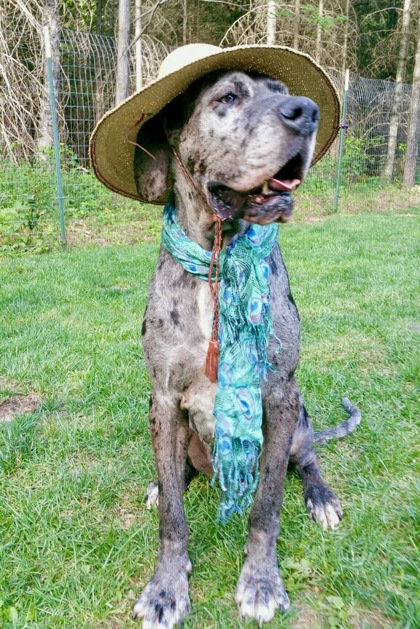
Promise
Upper Midwest Great Dane Rescue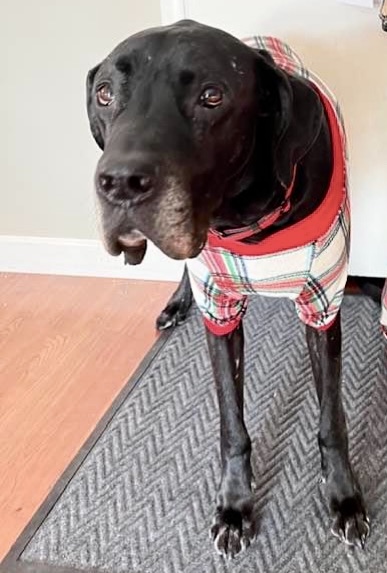
Brando
Upper Midwest Great Dane Rescue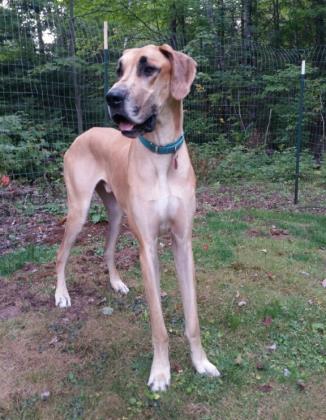
Meeko
Upper Midwest Great Dane Rescue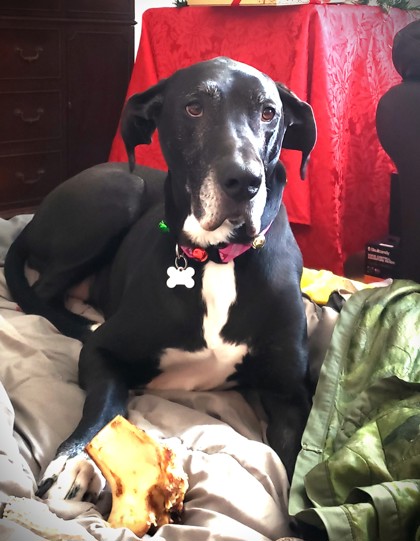
Tilly
Upper Midwest Great Dane Rescue
Mixes are in here too — each card shows the breed exactly as the rescue listed it. Every one goes to the rescue holding that animal, where you’ll find how to reach them. Adoptions happen fast, so check before you get attached.
Size changes everything, including dinner
The AKC calls the Great Dane the “Apollo of Dogs” and then, in the same breath, says that owning a dog of such imposing size, weight and strength is a commitment not to be entered into lightly. Both halves of that are true at once, and the practical stuff follows from the second half.
Bloat
Gastric dilatation-volvulus — bloat — is the AKC’s stated number-one killer of the breed. The stomach distends and twists, it happens fast, and knowing the signs in advance is the whole game. The AKC’s practical measures are feeding several small meals a day instead of one big one, and keeping vigorous exercise away from mealtimes. Many owners and breeders also consider a prophylactic gastropexy, a preventative surgical tack, and it’s a reasonable thing to ask a rescue whether a particular dog has already had.
Other conditions the breed can carry: eye and cardiac disease, hypothyroidism and autoimmune thyroiditis, and hip dysplasia. The national breed club’s recommended tests are a hip evaluation, a cardiac exam, an ophthalmologist evaluation and a thyroid evaluation.
Two years before you run with them
Danes need daily exercise appropriate to their age, and the AKC’s baseline is modest — a brisk walk two or three times a day can be enough. What’s not flexible is the wait: no jogging or distance hiking until the dog is two, to avoid damaging joints that are still growing. A young adult Dane in a rescue listing may still be inside that window.
The other rule is the leash. Danes follow a scent wherever it goes, so the AKC advises keeping them on lead and only loose in an area secured by a tall fence.
Training a dog you cannot out-muscle
The AKC’s phrasing is that for a breed this large and powerful, obedience training is a must. The good news is the breed makes it easy — sociable, friendly, eager to please, and responsive to firm, consistent methods. Danes are alert home guardians despite the sweet nature, and they need real human contact rather than a yard.
Where else to look
The Great Dane Club of America, established in 1889, is the AKC parent club, and it publishes a list of affiliated Great Dane rescues by region. The AKC also runs a national rescue network of more than 450 breed rescue groups. Breed rescues often cover several states at once, so a group based elsewhere may place into Minnesota, and a group listed here may place well outside it.
Adoption requirements, waiting lists and fees are set by each organization and they differ — expect an application, and expect questions about your fencing and your floors. We’re an independent directory and we’re not affiliated with any organization listed here, so confirm the details with them directly.